
What Is Qualified Immunity?
Incidents involving police use of force, especially shootings, often provoke public outrage and legal challenges. However, successfully suing officers is tough due to qualified immunity, a doctrine protecting officials from liability unless they violate clearly established rights. While meant to help law enforcement, it often blocks justice for victims. This doctrine sparks debate: supporters say it shields officers from endless lawsuits, critics argue it prevents legitimate claims and denies victims justice. As police shootings keep happening, courts and lawmakers are reassessing its role and scope.
The debate over qualified immunity touches on fundamental questions about police accountability, individual rights, and the limits of government power. In recent years, both the public and policymakers have paid greater attention to the issue, and growing movements are pushing for reform. Understanding how qualified immunity functions is vital to engaging in informed discussion about police practices and civil justice.
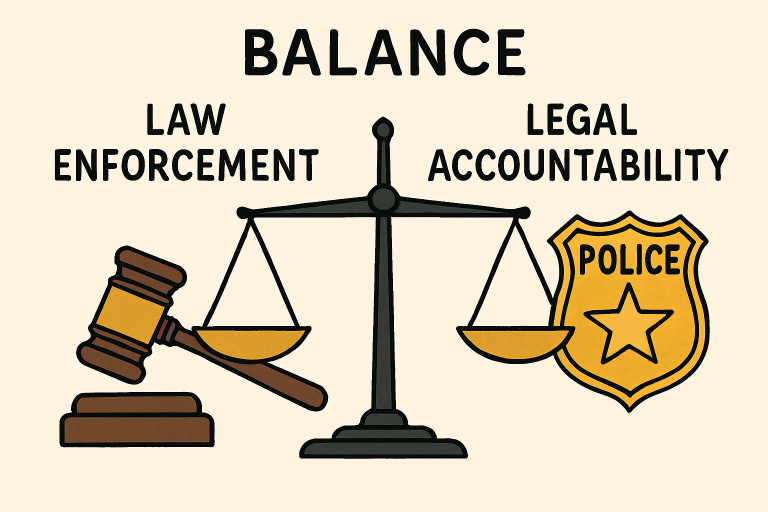
With courtrooms, legislatures, and advocacy groups all weighing possible changes, the future of police accountability is likely to be shaped, in part, by ongoing debates over qualified immunity and how society should balance the interests of law enforcement with those of the communities they serve.
The Legal Foundation Behind Qualified Immunity
The modern legal basis for qualified immunity originates from the 1982 Supreme Court decision in Harlow v. Fitzgerald. The Court ruled that government officials are protected from liability unless their actions violate “clearly established” law—meaning that a reasonable official would understand the act was unlawful in the specific context. This often forces courts to examine not only the facts of a given police shooting but also prior judicial decisions with almost identical circumstances. Without this precedent, cases can be dismissed before reaching a jury, making it difficult for plaintiffs to achieve relief.
How Police Shootings Are Evaluated in Civil Courts
When a civil lawsuit is brought after a police shooting, courts must answer two primary questions. First, did the officer use excessive or unreasonable force under the Fourth Amendment? Second, was the unlawfulness of that specific conduct “clearly established” by prior cases? If the answer to the second question is “no” due to the uniqueness of the details, qualified immunity almost always applies. This requirement often means many cases are dismissed at the summary judgment stage, before trial, reducing opportunities for victims’ families to seek monetary or declaratory relief.
Arguments for Keeping Qualified Immunity
The provided text argues that qualified immunity protects officers acting in good faith, enabling them to prioritize public safety over defending against baseless lawsuits. It acknowledges the challenging, split-second decisions officers make in dangerous situations, where perfect judgment is not feasible. The doctrine is also presented as a tool for recruiting and retaining officers by mitigating concerns about financial ruin from job-related decisions. Proponents of qualified immunity fear that its absence could lead officers to hesitate in critical moments, potentially increasing risks to themselves and the public, a concern often raised in legislative and judicial discussions.
Arguments for Reform or Abolition
Opponents say qualified immunity often shields misconduct from accountability, even without a similar prior case. It can block victims, like families of police shooting victims, from court hearings despite evidence. The “clearly established” standard is inconsistently applied across circuits, causing varied outcomes. Judges, advocacy groups, and some law enforcement officials want to reform or eliminate it. Various initiatives aim to restrict or abolish qualified immunity to boost public trust and justice.
Potential Reforms in Focus
Across the U.S., legislatures consider changes to qualified immunity, with some proposals clarifying “clearly established” standards and others proposing its abolition for police. Colorado and New Mexico are testing new frameworks for victims to pursue civil actions, balancing safety and accountability. Legal observers watch these experiments, as state reforms might influence broader national policy. Adoption elsewhere depends on impacts on officers and communities.
Looking Forward: What’s Next for Police Accountability?
As the debate over qualified immunity continues, future developments will impact police shooting investigations and adjudication. National conversations from Congress to city councils reveal ongoing tension between law enforcement needs and public rights. Those concerned should stay informed through reliable reporting and legal analysis. As policymakers and courts consider reform, the doctrine’s future remains key to community-police relations.